SAF Production: Will South Africa Step Up to the Plate?
September 3
UKOHA MONDAY

Recently, the International Air Transport Association (IATA) called the attention of the new government in South Africa to the enormous opportunities for the country in the production of Sustainable Aviation Fuel (SAF). IATA noted that given the enabling environment, South Africa would be a natural and leading player in the SAF economy in the African region with capacity not only to meet its own requirement but also spare capacity for export.
The use of SAF is recognized as the most pivotal element in meeting the NetZero 2050 target with SAF expected to contribute about 65% of the target. While SAF adoption and production continues to grow across the world, Africa remains at the experimental level.
Africa continues to be hamstrung in its attainment of SAF objectives by lack of expertise and awareness, poor investments in SAF and technological challenges. Governments in the continent have not prioritized nor developed policies to support SAF adoption and development for obvious reason mainly competition from other social sector needs, and partly due to the fact that Africa is not a major polluter based on its share of the market.
According to IATA, in 2023, "SAF volumes reached over 600 million liters (0.5Mt), double the 300 million liters (0.25 Mt) produced in 2022. SAF accounted for 3% of all renewable fuels produced, with 97% of renewable fuel production going to other sectors." For 2024, IATA says "SAF production is expected to triple to 1.875 billion liters (1.5Mt), accounting for 0.53% of aviation's fuel need, and 6% of renewable fuel capacity.”
Despite this impressive growth, Mr. Willie Walsh, IATA Director General says "SAF as a portion of all renewable fuel production will only grow from 3% this year to 6% in 2024. This allocation limits SAF supply and keeps prices high. Aviation needs between 25% and 30% of renewable fuel production capacity for SAF. At those levels aviation will be on the trajectory needed to reach net zero carbon emissions by 2050." This shortfall thus opens up considerable opportunities for more players to help the industry achieve its target, including South Africa.
IATA's South Africa Charge
South Africa will benefit from investments in the SAF economy both for itself and also help the global push to scale up SAF production. A report by the RSB (Roundtable on Sustainable Biomaterials Association) notes that: The development of a new domestic SAF industry could be a pillar of South Africa's low-carbon economy and play an important role in a just energy transition. The SAF industry has the potential to create some 90 thousand jobs in the country, and almost 75% of the current coal hauling jobs could be directly transitioned to biomass transport because of overlap in coal and biomass supply chains and usage of the same truck types. Moreover, SAF implementation can improve South Africa's balance of trade by R81,5 billion to R170 billion per annum.”
According to IATA, South Africa "has an abundance of feedstocks from which SAF can be derived including sugarcane low carbon by-products, and biomass from cleared invasive alien plants (IAPs). With respect to IAPs, harvesting them will come with other environmental benefits such as improved biodiversity and water security. In all cases, no feedstocks would compete with food production for land or water use in line with the ICAO sustainability framework.”
Furthermore, there is significant production capacity. IATA notes that "The WWF estimates that South Africa has the potential to produce between 3.2 and 4.5 billion liters of SAF annually. This will be more than meet domestic fuel demand (1.8 billion liters) and present an export opportunity, where policies will be central for realization.”
South Africa’s other advantages include the existence of "refinery infrastructure which should be explored for brownfield investments-plant conversions or co-processing", South Africa's "long experience in synthetic fuel production, particularly the Fischer-Tropsch method" and "robust academic and research institutions' which "have a history of supporting innovations and technology for fuel production."
IATA also notes that South Africa has an advantage of location with OR Tambo International Airport in Johannesburg and Cape Town International Airport already serving "as important hubs for connecting flights within Africa and to other parts of the world.”

There is Work to Be done
To tap fully into the opportunities of SAF, IATA says South Africa has work to do. First, the country needs to invest in industrial infrastructure to "Accelerate the development of production capabilities by using existing industrial infrastructure (brownfield investment) as a competitive advantage in the development and scaling of SAF production.", then pool resources through the identification of "opportunities to develop SAF by encouraging collaboration between the government, private sector, and international partners to pool resources and expertise.
Furthermore, the government is called upon to incentivize research and development (R&D) efforts to push "innovation to drive down costs, increase production volumes, and diversify source crops/production methodologies with tax incentives, grants, and subsidies for R&D in SAF technologies.
Additionally, investments in infrastructure to "Support the development of necessary infrastructure (greenfield), such as biorefineries and green hydrogen production facilities with tax and other incentives.”
Implications for the Rest Of Africa
The African Airlines Association says it believes "accelerated deployment of SAF in the region will play a significant role towards a greener and sustainable African aviation industry." While South Africa's efforts would remain a national effort, if well implemented, its impact would be felt across the continent, more instantly in the Southern Africa region. South Africa would consolidate on its head start already established and become not only a major supply point for African countries but also position itself to absorb the feedstock from other countries in the region where available to expand its production and export capacity.
The expected excess capacity could also be channeled to other African countries in the spirit of African cooperation and position Africa appropriately in the SAF economy.
It is correct to say the demand for SAF in Africa is currently held back by price and availability, and the development of production capacity in South Africa will help Africa's SAF economy.
We wait with bated breath.


Recent Posts
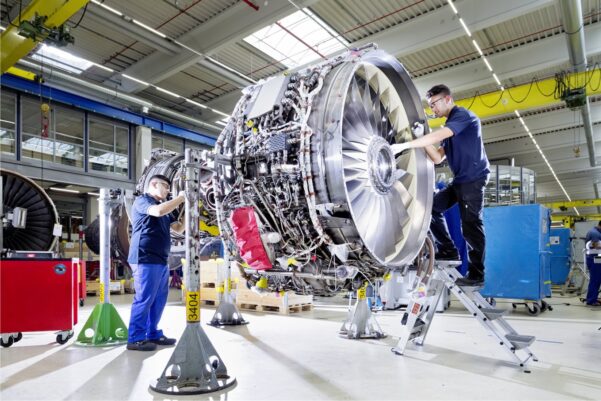
Aircraft Manufacturers And The Future Of MRO Services In Africa
New Horizons In African Aviation: Insights Into Air Cargo Trends, Challenges, And Growth

Aviation In Egypt: Women Breaking Barriers

Africa’s MRO Services Providers Need To Adapt

Barrister Festus Keyamo: Repositioning Nigeria’s Aviation Industry
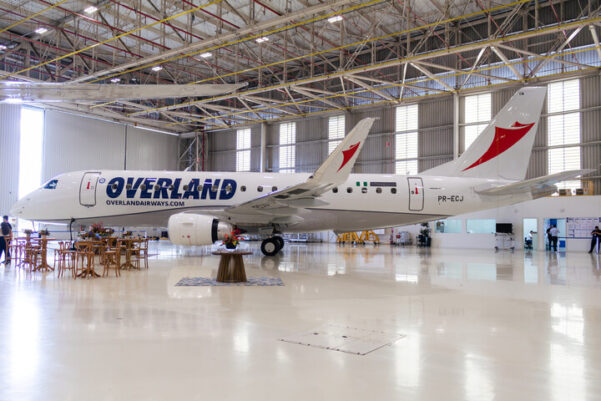
Overland Airways Continues Strategic Route Expansion
Overland Airways Commences Flights To Bola Ahmed Tinubu International Airport Minna, Niger State

Safety in The African Aviation Sector: The Way Forward

Tackling The Menace Of Unruly Passengers

SAHCO Enhances Cargo Security With Cutting-Edge ETD Machine

FAAN Shuts Lagos Airport Runway Temporarily For Repairs

Ethiopian Airlines to Commence New Flight Service to Porto, Portugal

NCAA Reinstates Omni-Blu Aviation Limited’s AOC

SAA Appoints Prof. Lamola as Permanent Group CEO of SAA

African Airlines Record Impressive 14.9% Year-On-Year Increase In Demand For Passenger Travel

African Airlines See 3.4% Decrease In Cargo Demand for January 2025

Qatar Airways Cargo Launches AEROSPACE Product

Jet2 Expands with the Launch of Two New Routes in Morocco
Africa’s All-Accident Rate Rises From 8.36 per million sectors in 2023 to 10.59 in 2024, Industry Records Zero Fatality Risk in 2024